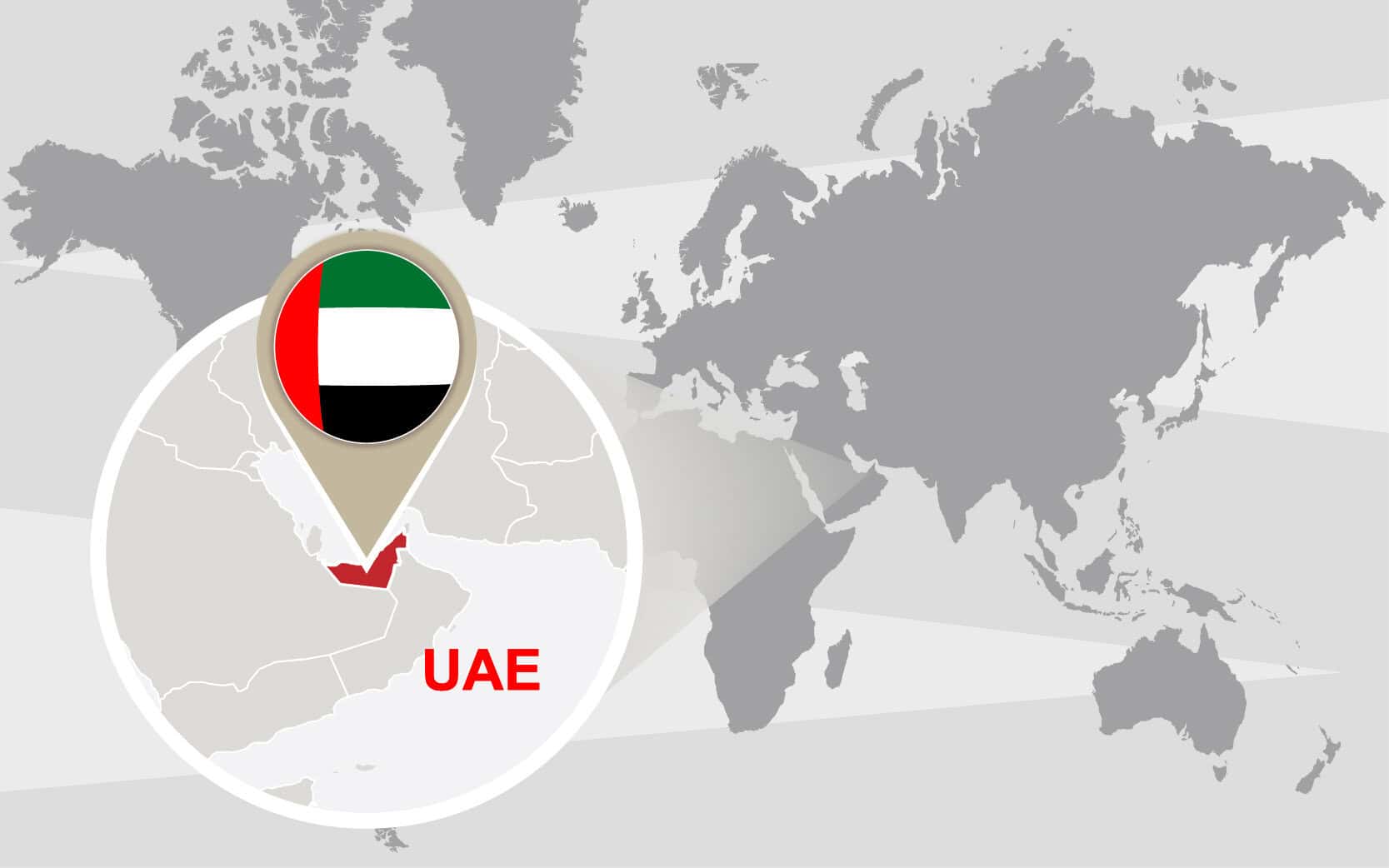
UAE

UAE

Quick Facts

  • Crescent Petroleum has maintained its headquarters in Sharjah, UAE since 1971.
  • Technical operator, until 2004, for the license concessions of Ajman, Ras Al Khaimah, Umm Al Quwain held by Atlantis/Sinochem. The work conducted by Crescent Petroleum included drilling of several exploration and appraisal wells.

Crescent Petroleum has been an active participant in the UAE oil and gas industry for over five decades, supporting exploration, drilling, and field development across several emirates.

Through its established logistical base in Sharjah, Crescent Petroleum has served as technical operator and project manager for third-party licence holders, delivering exploration and appraisal well programmes with operational efficiency and cost discipline.

Crescent Petroleum was appointed technical operator by PGS/Atlantis for licence concessions in Ajman, Ras Al Khaimah, and Umm Al Quwain. Until 2004, the company executed the approved work programmes, including the drilling of exploration and appraisal wells, for the holder of these licenses.

Mubarek field

Quick Facts

  • Mubarek Field has been one of the region’s prolific oil and gas discoveries since production commenced in 1974.
  • Estimated cumulative production to-date in excess of 100 million barrels of oil.
  • Production facilities have processing capacity of 60,000 bopd of oil and gas export pipelines with export capacity of 150 MMscf/d in place.
  • Capital investment in the Mubarek Field exceeds US$500 million with finding and development cost of US$2.90 per bbl
  • Concession handed over to the Government upon expiry of the license period

Discovered in 1972 and brought into production in 1974, the Mubarek Field offshore Sharjah marked a pivotal milestone in the emirate’s energy development. Delivered on an accelerated timeline, the project was key to Crescent Petroleum developing considerable experience and expertise in the management and operation of complex, high-pressure, deep carbonate reservoirs. The 1969 offshore concession generated substantial revenues for the Government of Sharjah, supporting the emirate’s economic growth and infrastructure development.

The offshore concession was awarded in 1969 to Buttes Gas and Oil Co. International Inc., a subsidiary of Crescent Petroleum. Following offshore seismic surveys in 1971, the Mubarek discovery well was drilled in 1972, and field development was subsequently fast-tracked.

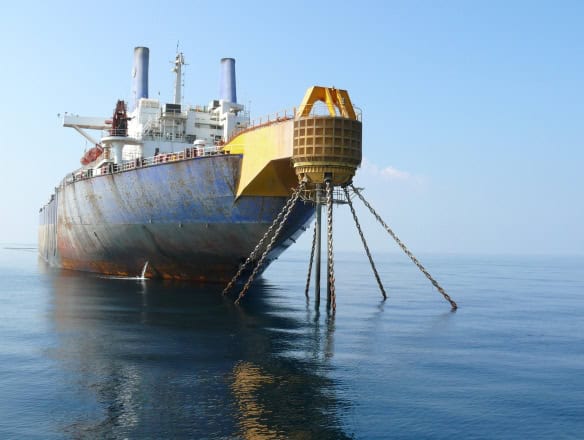
Within 13 months from the discovery confirmation well, the field was brought to full production at a rate exceeding 60,000 bopd, including the drilling of three additional wells and the installation of the processing platform and an additional well head platform, export loading terminal, and all associated support structures and pipelines. At the time, this was a world record for the fastest discovery to first production for an offshore field development.

From production commencing in 1974, the Mubarek Field underwent several phases of development:

  • The initial phase of development of the Ilam/Mishrif oil reservoir, at a depth of approximately 12,500 ft, was completed in 1977.
  • Development of the deeper Thamama gas condensate reservoir, at a depth of approximately 15,500 ft, was initiated in 1987 for the production of gas and condensate.
  • Gas sales to Dubai were established in January 1993 through a purpose-built 92-km offshore gas transmission pipeline with a capacity of 150 MMscf/d, built and operated by Consolidated Transmissions Inc., a wholly owned subsidiary of Crescent Petroleum.

Over 100 million barrels of oil and condensate, along with approximately 300 Bscf of natural gas, were produced from the Mubarek Field. This was achieved at a very efficient finding and development cost of approximately US$2.90 per barrel, despite the great reservoir depth and complex stratigraphy.

At peak production, the field produced an estimated 60,000 barrels of oil per day. Individual well cumulative production reached up to 22 million barrels, with all wells reporting recoveries in excess of 1 million barrels.

Sharjah Onshore Concession

Quick Facts

  • The onshore Sharjah block covered approximately 1,243 sq. km of acreage near existing gas-condensate fields.

  • 2D seismic data were acquired by WesternGeco in Q3 2008. The data indicated significant potential recoverable volumes in line with existing onshore gas-condensate field sizes in the Northern Emirates. Crescent Petroleum completed interpretation of the Thamama horizon and identified several leads and prospects consistent with the size of nearby producing fields.

  • A farm-out agreement was signed with Rosneft Oil Company in June 2010. Drilling commenced in June 2010 and included two exploration wells to an estimated depth of 15,000 ft.

  • The concession was subsequently handed back to the Government of Sharjah upon expiry of the licence period.

In February 2008, the Ruler of Sharjah, His Highness Dr. Sheikh Sultan bin Mohammed Al Qasimi, and Crescent Petroleum signed a concession agreement to explore the Sharjah block covering approximately 12 acres south and east of the condensate fields. 

Immediately following the award of the Concession, Crescent Petroleum contracted WesternGeco to acquire new 2D seismic data. The acquisition of the seismic data was completed in late 2008, where the local topography presented significant challenges. The processing of the data was completed by WesternGeco in early 2009, and initially, several leads were identified with significant potential recoverable volumes in line with the existing onshore gas condensate field sizes of the Northern Emirates.

Sharjah Onshore Geology

The geological history of the UAE has been favorable to hydrocarbon exploration, with significant discoveries of several giant oil/gas fields in the thrusted anticlines. Most of these oil fields are in the Lower Cretaceous age rocks of the Thamama carbonates.

The stratigraphy of the Sharjah onshore block shows that from surface to Nahr Umr the rocks are predominantly marls, shales, and argillaceous limestone of the Aruma, Pabdeh, and Fars groups, while in the eastern part of Sharjah, the Thamama reservoir lies below allochthonous sediments. The major reservoir rocks of the Thamama carbonates lie below the Nahr Umr, which is the regional top seal for the Thamama reservoir.

The Thamama Group was deposited in shallow-water, open-shelf to lagoonal environments on a carbonate ramp and forms the primary reservoir objective of the onshore Sharjah concession. The average thickness of Thamama in the region is 2,700 feet. The prolific Shuaiba has an average porosity of 10% and a maximum porosity of 20% with an average thickness of 220 feet. Gas-condensate is seen along the Sajaa-Margham thrust as far north as the Bukha field (66 miles) and south to Khusub-1 (50 miles).

To date, only two wells have been drilled in this extensive 1,243 sq km area, and neither of these wells has penetrated the Thamama formation. In addition to the primary objective of the Lower Cretaceous Thamama, there are secondary objectives of the Upper Cretaceous reservoirs of the Qahlah and Simsima formations. Two exploration wells have flowed black oil of 37° API from the sandy facies of Aruma (i.e., the Qahlah formation).

This concession area is surrounded by four mature gas-condensate fields.

Seismic Analysis

The Sharjah onshore concession is covered with 2D seismic surveys of different vintage, which were acquired between 1970 and 1993. Generally, seismic data quality was poor and was not suitable for making a map of deeper horizons. To infill the pre-existing grid to enable better definition of the exploration potential of the acreage, 545 km of 2D seismic data over 34 lines was acquired as shown in the figure above using WesternGeco Q-Land MAS technology, which enabled better definition of its exploration potential.

The seismic data were processed and reprocessed by different vendors. Final processing on selected lines was carried out by Calgary-based Thrust Belt Imaging company (TBI), which improved the overall imaging quality of the seismic data of the deeper horizons over the leads. Crescent Petroleum has completed the interpretation of the Thamama horizon and has identified several leads and prospects with significant potential
volumes.

Farm-Out Agreement

Crescent Petroleum and Rosneft Oil Company, Russia’s largest oil and gas company, jointly signed a farm-out agreement in June 2010 for both companies to work together to develop the Sharjah onshore Concession. The farm-out agreement follows the Strategic Cooperation Agreement between Rosneft and Crescent Petroleum that was signed in May 2010 to jointly develop material oil and gas opportunities in the Middle East and North Africa region.

Rosneft has 49% of the Participating Interest in the Concession and Crescent Petroleum holds the remaining 51%. The agreed investment plan of approximately AED 220 million (US$60 million) would go principally towards initial exploration activities, including the drilling of two wells to an approximate depth of 14,800 feet. G&G work aimed to identify the second well location.

Sir Bu Nu’ayr

Quick Facts

  • Situated in the heart of one of the world’s major and prolific hydrocarbon basins.
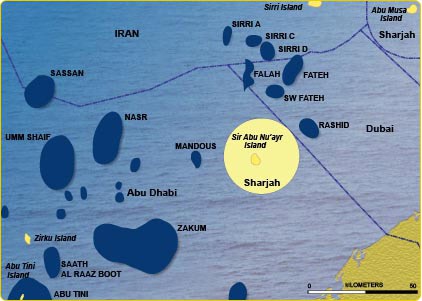
  • The acreage is flanked to the east by Dubai’s Fateh and Rashid oil fields complex, to the north by the Sirri oil field of Iran and to the west by the prolific oil and gas fields of Abu Dhabi.
  • Salt Dome hydrocarbon plays are prevalent throughout the Gulf of Mexico, the North Sea and within the Arabian Gulf.
  • Previous 2-D seismic survey indicates the project’s considerable potential.
  • Comprehensive 3D/2D seismic survey design covering the island and the surrounding area of 12 nautical miles were conducted during 2008.

The Island of Sir Abu Nu’ayr, which sits in the centre of the concession area, is part of the Emirate of Sharjah and is located 80 km offshore of Abu Dhabi, in the middle of the prolific offshore oil territory. The acreage is flanked to the east by Dubai’s Fateh oil field complex, to the north by the Sirri oil field of Iran and to the west by the prolific oil and gas fields of Abu Dhabi.

Sir Abu Nu’ayr is a salt-piercement structure formed by the movement of Cambrian (Hormuz) salt. Salt deposited of Cambrian age has moved progressively upward, puncturing through the younger overlying strata to create a dome structure. Surface expressions are composed of evaporites rocks, plus igneous rocks and quartzitic sandstone. Such deep-seated salt movement has affected all the major highly prolific reservoirs (Khuff, Arab, Ilam/Mishrif and Thamama) of the giant Abu Dhabi fields (Zakum, Umm Shaif, Bab and Abu Hasa) and generated potential highly dipping structures around the flanks of the piercement structure.

A 2D seismic acquisition was carried out in 1999. The acquisition geometry, processing and interpretation of the dataset have been considered a remarkable success case. The forward work program is underway to undertake a 3D seismic survey, using the most up-to-date seismic techniques to image under the Island and to determine the structural configuration of the salt and formations adjacent to the Island. This will lead to subsequent exploration drilling.

Crescent Petroleum’s expertise in this technology significantly reduces the exploration risk associated with salt piercement plays. Geologically, the main reservoir intervals are most likely to be the prolific Ilam/Mishrif and Thamama formations of the Cretaceous age and Kuff formation of the Permian age. These reservoirs comprise shallow marine carbonates having excellent reservoir properties, as evidenced by the many world-class and giant oil fields in the immediate region.

A comprehensive 3D/2D survey design study was conducted during 2008 using Raytrace modeling for all target reservoirs and encompassing the island plus the entire 12 Nautical Miles concession area. A further study in 2009 developed the play concepts of the salt-related structures based on the available data.

Gas Supply Project

Quick Facts

  • UAE Gas Supply Project involved the ownership, transportation, processing, distribution, marketing and sale of natural gas and petroleum products.
  • Crescent Petroleum through its affiliates secured long-term agreements for the sale of gas with ultimate end-users in the UAE, thus establishing a market for the imported gas.
  • Over US$300 million investment in the gas sweetening plant and the transmission facilities, which are owned by SajGas and UGTC respectively, both wholly owned subsidiaries of Dana Gas PJSC.
  • Gas deliveries by NIOCwere due to commence in 2005, however, due to further technical issues and ongoing delays, the completion of the Iranian facilities to produce and transport the gas to CNGC was delayed, leading to contract termination in 2018.

Crescent Petroleum has historically been pivotal in putting in place the necessary arrangements to facilitate the development and expansion of the gas market in the UAE. Crescent Petroleum and its management have pioneered commercial inter-Emirate gas supply and sales arrangements in the United Arab Emirates, based on gas supplies from Sharjah.

Crescent Petroleum’s management concluded the first inter-Emirate onshore gas supply contract from Sharjah for the UAE Federal Ministry of Electricity and Water in 1985, and then in 1986 another contract between the Emirates of Dubai and Sharjah. Subsequently, in 1991, Crescent Petroleum concluded the first offshore inter-Emirate gas sales and purchase agreement through a dedicated pipeline (on a build, own, and operate basis) from its offshore Mubarek Facilities to Jebel Ali, Dubai. Crescent Petroleum has extensive in-house technical skills and operating experience in managing and implementing gas development projects and is well established in the region to continue to play a key role in the further development of the burgeoning gas market.

Crescent Petroleum is thus ideally placed, as supplier, transporter, and marketer of gas, to play a significant role in consolidation and expansion of the gas market in the UAE, and the wider region, to service end-users in electricity and water, as well as other industrial sectors. Crescent Petroleum and its affiliates plan to continue their expansion and participation in the downstream gas and related industrial sectors to extract maximum value from the gas chain.